


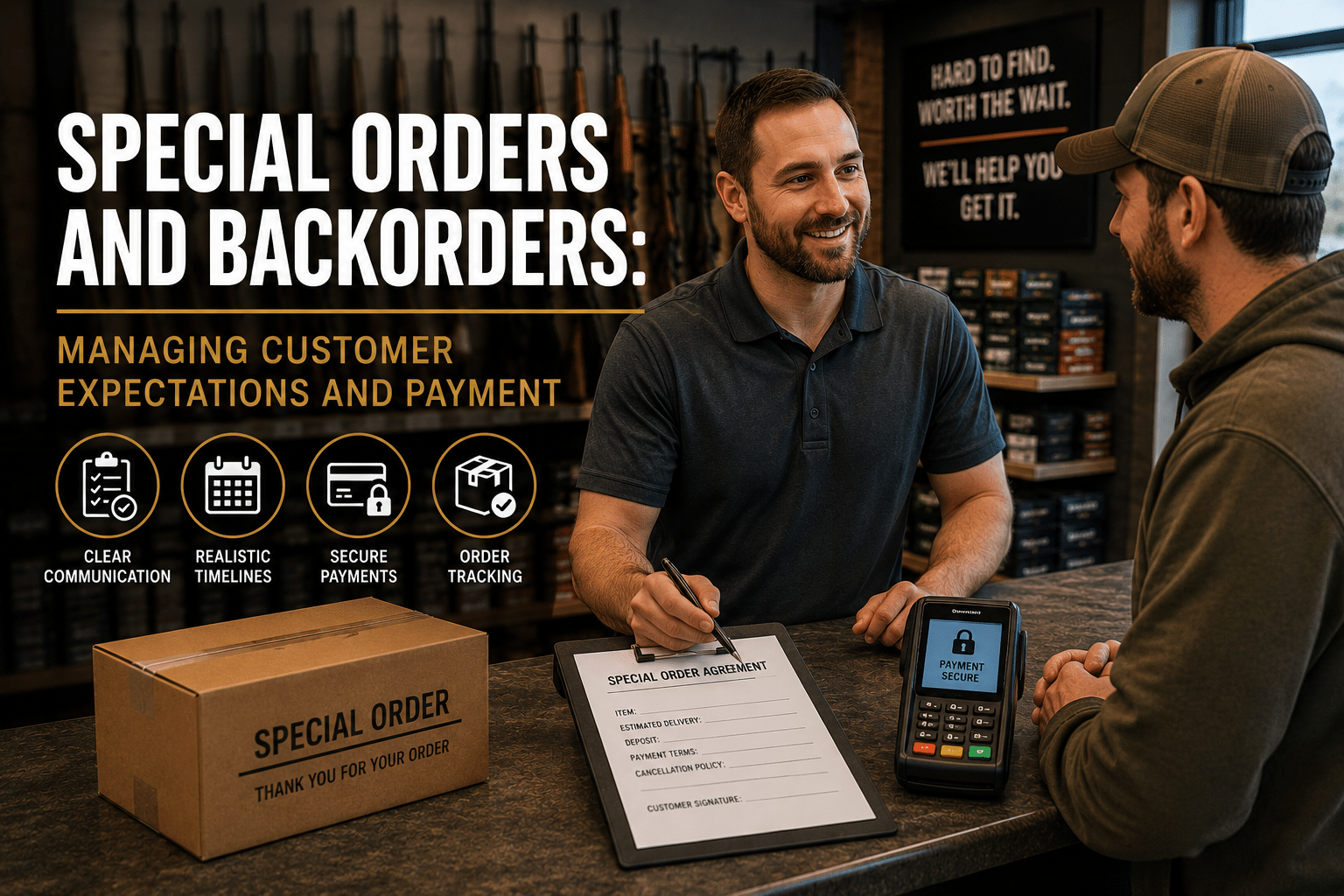
Every firearm retailer eventually encounters a situation where a customer wants something that is not currently available. Whether it is a hard-to-find firearm, a specialty optic, a suppressor-ready platform, or a limited-production accessory, special orders and backorders are a normal part of operating in the firearms industry.
While these transactions can generate valuable revenue and strengthen customer relationships, they also introduce challenges that standard in-stock sales do not. Extended wait times, supplier delays, inventory shortages, and changing customer expectations can quickly create frustration if the process is not managed carefully.
A structured payment and communication strategy helps retailers protect revenue while creating a better customer experience.
Understanding the Difference Between Special Orders and Backorders
Although the terms are often used interchangeably, they represent different situations.
A special order typically involves obtaining a product specifically for a customer that is not normally stocked in inventory.
A backorder usually involves a product that would normally be available but is temporarily unavailable due to supply chain constraints, manufacturer delays, or elevated demand.
Both situations require careful expectation management because the retailer cannot control every aspect of product availability.
Why Communication Matters
Many customer complaints related to special orders are not caused by delays themselves. They are caused by surprises.
Customers who expect a product within two weeks may become frustrated if it arrives three months later. Customers who understand from the beginning that delivery timelines are uncertain are often much more patient.
The key is communicating clearly before payment is collected.
Customers should understand:
- Estimated delivery timelines
- Factors that may cause delays
- Supplier dependencies
- Cancellation policies
- Payment requirements
Setting realistic expectations at the beginning often prevents problems later.
Determining the Right Deposit Policy
Deposits serve an important role in special-order transactions.
They demonstrate customer commitment and help protect the retailer from inventory risk.
Without a deposit, customers may abandon orders after the retailer has invested time and resources securing the product.
An effective deposit policy should address:
Deposit Amount
The amount should reflect the risk associated with the order.
Higher-cost or specialty products often justify larger deposits.
Refund Eligibility
Customers should understand whether deposits are refundable and under what circumstances.
Special Circumstances
Policies should address situations involving discontinued products, supplier cancellations, or extended delays.
Consistency helps reduce confusion and disputes.
Managing Supplier Relationships
Strong supplier relationships can significantly improve special-order outcomes.
Retailers should maintain regular communication with distributors and manufacturers regarding:
- Availability
- Lead times
- Shipment status
- Product substitutions
The better information a retailer receives, the better information can be shared with customers.
Accurate updates build trust and improve customer satisfaction.
Providing Regular Updates
One of the simplest ways to improve the customer experience is through proactive communication.
Even when no major progress has occurred, periodic updates reassure customers that their order remains active.
Useful update milestones may include:
- Order submission
- Supplier confirmation
- Shipment notification
- Arrival estimates
- Product receipt
Customers generally appreciate transparency, even when the news is not ideal.
Handling Delays Professionally
Delays are inevitable.
Supply chain disruptions, manufacturer production schedules, and distributor inventory shortages can affect nearly every product category.
When delays occur:
- Communicate early
- Provide realistic timelines
- Avoid making promises that cannot be guaranteed
- Offer alternatives when appropriate
Honesty often strengthens customer relationships more than overly optimistic projections.
Creating Documentation Standards
Documentation helps protect both the retailer and customer.
Maintain records that include:
- Product descriptions
- Deposit receipts
- Customer approvals
- Timeline estimates
- Communications
- Cancellation requests
Detailed records improve operational consistency and help resolve questions quickly.
Leveraging Technology
Modern retail systems can simplify special-order management.
Useful features include:
- Customer notifications
- Order tracking
- Inventory visibility
- Payment history
- CRM integration
Automation reduces administrative workload while improving customer communication.
Turning Special Orders Into Long-Term Relationships
Special orders often involve highly engaged customers who are seeking specific products.
These customers can become valuable long-term clients when the experience is managed well.
By communicating clearly, documenting expectations, and implementing thoughtful payment policies, firearm retailers can transform potentially frustrating transactions into opportunities to build trust and customer loyalty.
Special orders and backorders may involve uncertainty, but they do not have to create confusion. With the right processes in place, retailers can protect revenue, improve customer satisfaction, and strengthen their reputation in the marketplace.