


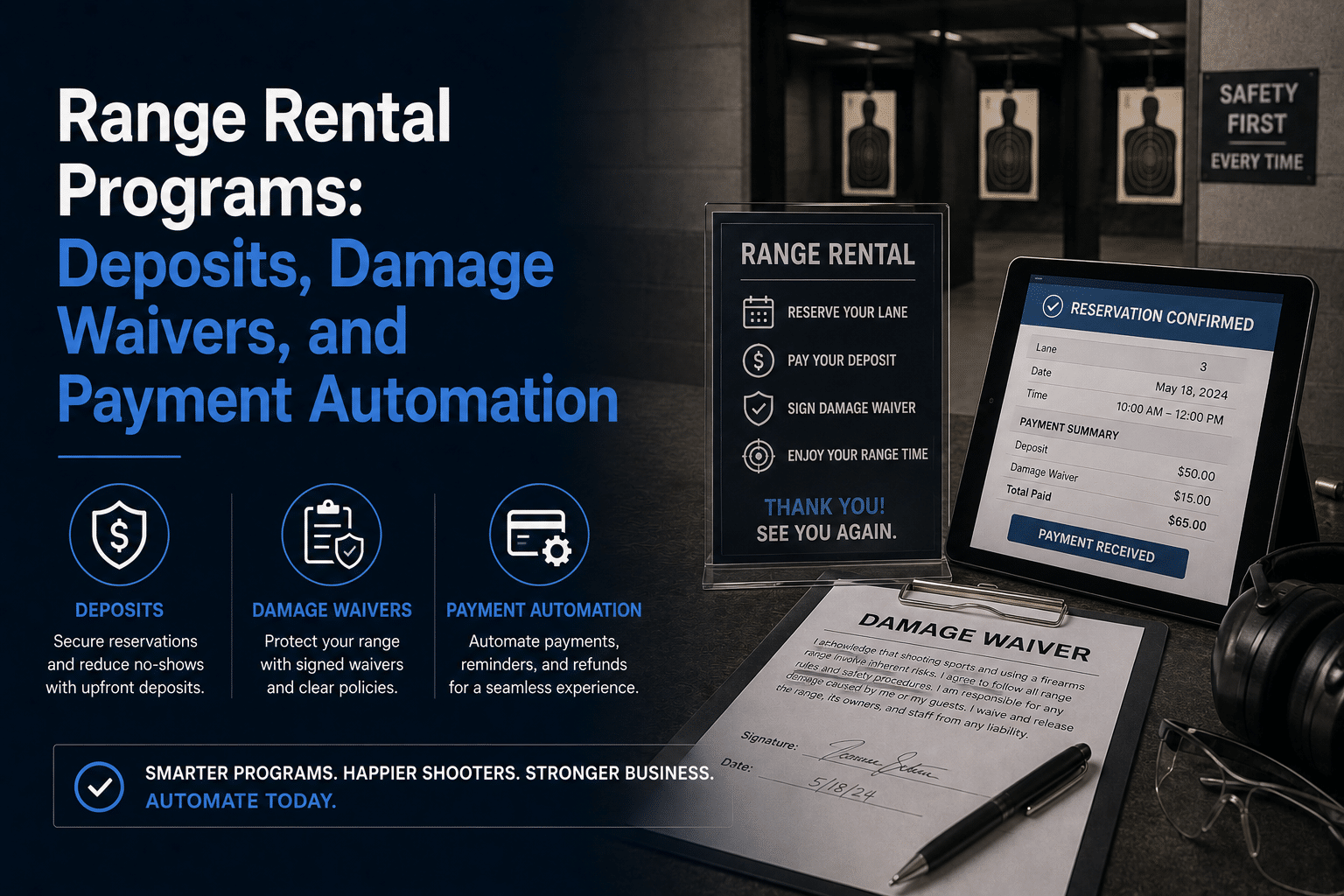
For many shooting ranges, firearm rentals are more than just a convenience offered to customers. They represent a valuable revenue stream, an opportunity to introduce new shooters to the sport, and a powerful tool for driving future firearm sales.
A successful rental program allows customers to test firearms before purchasing, explore different calibers, and gain hands-on experience in a controlled environment. However, rental programs also create operational challenges that traditional retail transactions do not.
Ranges must manage inventory, track firearm usage, collect rental fees, address liability concerns, and handle occasional equipment damage. Without clearly defined payment procedures, even a popular rental program can become difficult to manage.
By implementing structured payment workflows, clear customer policies, and modern payment technology, shooting ranges can create rental programs that are both profitable and operationally efficient.
Why Rental Programs Require Specialized Payment Policies
Most retail firearm sales involve a straightforward transaction.
The customer selects a product, completes payment, and takes possession according to applicable laws and procedures.
Rental programs operate differently.
The range retains ownership of the firearm while temporarily allowing customer use under controlled conditions. This creates unique considerations involving:
- Liability management
- Equipment protection
- Customer verification
- Damage recovery
- Rental tracking
- Payment collection
Because multiple activities occur during a single customer visit, a structured payment process becomes essential.
Establishing Clear Rental Agreements
Every rental transaction should begin with a clearly defined agreement.
Customers should understand:
- Rental fees
- Usage requirements
- Safety expectations
- Range rules
- Damage responsibilities
- Ammunition policies
Providing this information before the rental begins helps prevent misunderstandings later.
Many successful ranges incorporate digital waivers and rental agreements into their check-in process, allowing customers to review and acknowledge policies efficiently.
Should Ranges Collect Deposits?
Deposit policies vary significantly among ranges.
Some facilities require deposits for all rentals, while others reserve them for premium firearms or specialty equipment.
Whether deposits make sense depends on several factors.
Inventory Value
High-end firearms often justify additional safeguards.
A rental fleet containing premium pistols, precision rifles, or specialized suppressor-ready platforms may benefit from stronger protection measures.
Customer Base
Regular members may present different risk profiles than first-time visitors.
Operational Efficiency
Some ranges find deposits create unnecessary friction during the customer experience.
Others view them as an important risk-management tool.
The ideal approach balances customer convenience with operational protection.
Alternatives to Traditional Deposits
Not every range wants to collect cash deposits or place temporary holds on customer funds.
Alternative approaches may include:
Membership Programs
Members often receive access to rental privileges as part of their membership benefits.
Damage Agreements
Customers acknowledge financial responsibility for damage resulting from misuse or negligence.
Credit Card Authorization Holds
Some businesses utilize temporary authorizations rather than collecting actual deposits.
Each approach has advantages and operational considerations.
The key is selecting a process that aligns with the facility’s goals and customer expectations.
Managing Damage and Equipment Wear
Rental firearms experience significantly more usage than privately owned firearms.
Normal wear is expected.
The challenge arises when damage exceeds ordinary use.
Ranges should clearly distinguish between:
Normal Wear and Tear
Routine maintenance items such as springs, cleaning, and expected component replacement.
Accidental Damage
Incidents that occur despite reasonable use.
Negligent Damage
Damage resulting from improper handling, unauthorized modifications, or violation of safety rules.
Clear definitions help establish reasonable expectations for customers and staff.
The Importance of Written Damage Policies
Customers should understand how damage situations are handled before renting equipment.
Policies should address:
- Customer responsibilities
- Investigation procedures
- Repair cost determination
- Replacement scenarios
- Dispute resolution processes
Transparency helps reduce conflict and protects the business if questions arise later.
Documentation remains one of the strongest tools available when addressing damage-related issues.
Streamlining Rental Payments
Long check-in lines can negatively impact the customer experience.
Efficient payment collection helps keep operations running smoothly.
Many modern ranges utilize:
- Integrated POS systems
- Contactless payments
- Mobile wallets
- Stored customer profiles
- Digital receipts
These tools reduce administrative workload while improving convenience.
Customers increasingly expect fast and flexible payment options.
Membership Integration Opportunities
Rental programs often work well alongside membership offerings.
For example, memberships may include:
- Reduced rental fees
- Priority reservations
- Complimentary rentals
- Package discounts
Integrating rental and membership systems creates opportunities to increase recurring revenue while improving customer retention.
Members who visit frequently often generate additional purchases involving ammunition, accessories, training classes, and retail merchandise.
Using Rental Programs to Drive Firearm Sales
Many successful retailers view rental programs as a sales tool rather than a standalone revenue source.
Customers frequently rent firearms before making purchasing decisions.
This creates opportunities to:
- Demonstrate product features
- Build customer confidence
- Reduce purchase hesitation
- Increase conversion rates
Staff should understand how to transition rental experiences into sales conversations without creating unnecessary pressure.
The objective is helping customers make informed decisions.
Managing Reservations and Scheduling
As rental programs grow, scheduling can become increasingly complex.
Popular firearms may experience high demand during weekends, training events, and promotional periods.
Digital reservation systems can help manage:
- Equipment availability
- Customer bookings
- Staff scheduling
- Resource allocation
Automation reduces confusion while improving customer satisfaction.
Documentation and Recordkeeping
Accurate records support both operational efficiency and risk management.
Ranges should maintain documentation related to:
- Rental agreements
- Payment history
- Waivers
- Incident reports
- Damage claims
- Customer communications
These records help resolve disputes and provide valuable operational insights.
Well-organized documentation also simplifies employee training and policy enforcement.
Staff Training Matters
Employees play a critical role in rental program success.
Training should cover:
- Rental procedures
- Payment workflows
- Customer communication
- Equipment handling
- Damage assessment
- Policy enforcement
Consistency improves both operational performance and customer experience.
When procedures vary between employees, confusion often follows.
Measuring Program Performance
Rental programs should be evaluated regularly.
Useful metrics include:
- Rental volume
- Revenue per rental
- Conversion to firearm sales
- Equipment utilization
- Maintenance costs
- Membership upgrades
Tracking these indicators helps identify opportunities for improvement.
Even small operational adjustments can produce meaningful financial benefits over time.
Creating a Rental Program That Supports Growth
A well-managed rental program can provide substantial value for shooting ranges. It introduces new customers to the shooting sports, generates recurring revenue, supports firearm sales, and strengthens customer relationships.
However, success requires more than simply making firearms available for rent.
Clear agreements, thoughtful deposit policies, efficient payment systems, consistent documentation, and effective staff training all contribute to a successful program.
Ranges that invest in building structured rental workflows often experience fewer disputes, smoother operations, and stronger customer satisfaction.
When properly managed, a rental program becomes more than a revenue source. It becomes an important part of the customer journey and a valuable contributor to long-term business growth.