


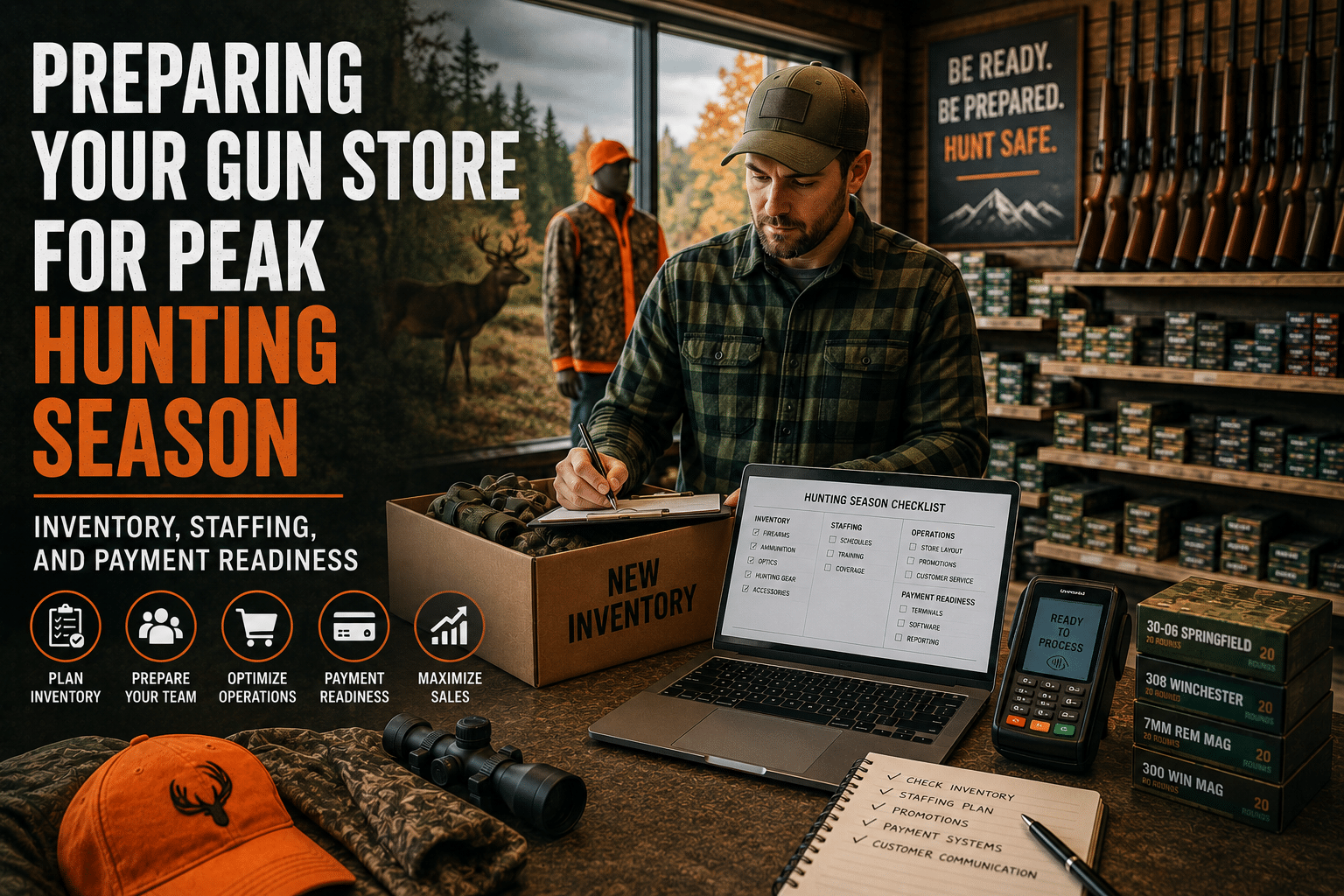
For many firearm retailers, hunting season represents one of the most important sales periods of the year. Demand for firearms, optics, ammunition, apparel, accessories, and related outdoor equipment often increases significantly in the weeks leading up to major hunting seasons.
While strong seasonal demand creates opportunities for growth, it can also expose operational weaknesses. Inventory shortages, staffing challenges, checkout delays, and customer service issues can quickly turn a busy season into a stressful one.
Successful retailers understand that hunting season preparation begins long before customers start walking through the door.
By planning inventory, staffing, payment systems, and customer communications in advance, firearm retailers can maximize sales while delivering a better overall customer experience.
Understanding Seasonal Demand Patterns
One of the biggest advantages firearm retailers possess is the predictability of many seasonal trends.
Unlike unexpected market events, hunting seasons occur on a recurring schedule.
Historical sales data often reveals patterns involving:
- Firearm purchases
- Optics sales
- Ammunition demand
- Hunting apparel
- Safety equipment
- Range accessories
Reviewing previous years can provide valuable insights into upcoming inventory and staffing needs.
The more accurately demand can be forecasted, the easier it becomes to prepare effectively.
Reviewing Historical Sales Data
Before placing seasonal inventory orders, retailers should examine historical performance.
Questions worth asking include:
- Which products sold most quickly?
- Which products experienced stock shortages?
- Which items remained unsold?
- What product categories generated the highest margins?
- When did demand begin increasing?
Historical information often provides a more reliable planning foundation than assumptions or industry trends alone.
Data-driven decisions generally produce better results.
Planning Inventory Early
Inventory planning is one of the most critical components of hunting season preparation.
Many retailers make the mistake of waiting until demand begins to increase before placing orders.
Unfortunately, suppliers are often experiencing the same demand pressures.
Ordering early helps reduce the risk of:
- Backorders
- Delayed shipments
- Lost sales
- Customer frustration
The goal is balancing inventory availability with responsible cash flow management.
Retailers should prioritize products that consistently perform well while avoiding unnecessary overstocking.
Identifying High-Demand Categories
Not every product category experiences the same seasonal demand.
Common hunting-season priorities often include:
Firearms
Bolt-action rifles, hunting shotguns, and specialty hunting platforms frequently see increased interest.
Optics
Scopes, binoculars, and rangefinders often experience strong seasonal demand.
Ammunition
Popular hunting calibers may become difficult to source as demand increases.
Accessories
Slings, bipods, cleaning kits, cases, and hunting packs often generate additional sales.
Understanding category-specific demand helps improve purchasing decisions.
Strengthening Supplier Relationships
Supplier communication becomes increasingly important during seasonal sales periods.
Retailers should engage with distributors and manufacturers well before demand peaks.
Useful discussions may involve:
- Inventory availability
- Lead times
- Promotional opportunities
- Product allocations
- Special purchasing programs
Strong supplier relationships often improve access to inventory during competitive periods.
Preparing Staffing Levels
Inventory alone does not create a successful hunting season.
Customers also expect knowledgeable service and efficient transactions.
As demand increases, retailers should evaluate staffing requirements.
Questions to consider include:
- Will additional sales coverage be needed?
- Are extended store hours planned?
- Is seasonal hiring necessary?
- Do employees need additional product training?
Understaffing can create long wait times and missed sales opportunities.
Preparation helps maintain service quality during busy periods.
Product Knowledge Training
Hunting customers often have detailed questions.
Employees should be prepared to discuss:
- Caliber selection
- Optic compatibility
- Ammunition recommendations
- Hunting regulations
- Accessory options
Well-informed employees create confidence and improve customer satisfaction.
Training sessions before peak season can significantly improve sales effectiveness.
Optimizing Store Layout
Store organization can influence both sales performance and customer experience.
Prior to hunting season, retailers should evaluate:
- Product placement
- Traffic flow
- Promotional displays
- Checkout areas
Popular products should be easy to locate.
Impulse-purchase items should be positioned strategically.
A well-organized store helps customers find what they need while encouraging additional purchases.
Ensuring Payment Systems Are Ready
Busy sales periods often place additional demands on payment infrastructure.
Retailers should verify that:
- Terminals are functioning properly
- Software updates are complete
- Internet connectivity is stable
- Ecommerce systems are operational
- Reporting systems are accurate
Technical issues during peak periods can result in lost sales and frustrated customers.
Preventive maintenance helps reduce these risks.
Preparing Ecommerce Channels
Many customers begin their shopping journey online.
Retailers should review:
- Product listings
- Inventory synchronization
- Checkout functionality
- Mobile responsiveness
- Promotional messaging
Online systems should accurately reflect available inventory and current offerings.
Customers expect consistency between online and in-store experiences.
Managing Seasonal Promotions
Promotions can be highly effective during hunting season, but they should be planned strategically.
Potential opportunities include:
- Package deals
- Optic bundles
- Ammunition promotions
- Accessory discounts
- Loyalty rewards
Promotions should support profitability rather than simply increasing sales volume.
The objective is generating sustainable revenue growth.
Forecasting Cash Flow
Peak sales periods often require increased spending before revenue arrives.
Retailers should forecast:
- Inventory purchases
- Staffing expenses
- Marketing costs
- Vendor obligations
Understanding cash flow requirements helps businesses avoid unnecessary financial pressure.
Planning ahead creates flexibility and supports better decision-making.
Enhancing Customer Communication
Customers appreciate timely and relevant information.
Retailers can use:
- Email campaigns
- Social media updates
- Website announcements
- In-store signage
Communication can highlight:
- New inventory
- Seasonal promotions
- Product availability
- Upcoming events
Effective communication helps drive traffic while improving customer engagement.
Measuring Performance Throughout the Season
Preparation should continue after the season begins.
Retailers should monitor:
- Sales trends
- Inventory levels
- Customer feedback
- Staffing effectiveness
- Promotional results
Ongoing analysis allows businesses to adjust strategies as conditions change.
Flexibility often contributes significantly to seasonal success.
Turning Hunting Season Into Long-Term Growth
Many retailers view hunting season as a short-term sales opportunity. The most successful businesses see it as an opportunity to strengthen customer relationships, improve operational performance, and create long-term growth.
Preparation plays a critical role in achieving these goals.
By planning inventory carefully, training employees effectively, ensuring payment systems are ready, and maintaining strong communication with both suppliers and customers, firearm retailers can navigate peak demand periods with confidence.
A successful hunting season is rarely the result of luck. It is usually the result of thoughtful preparation, disciplined execution, and a commitment to delivering a positive customer experience.
Retailers who approach hunting season strategically are often rewarded not only with stronger sales but also with stronger customer loyalty and a more resilient business overall.