


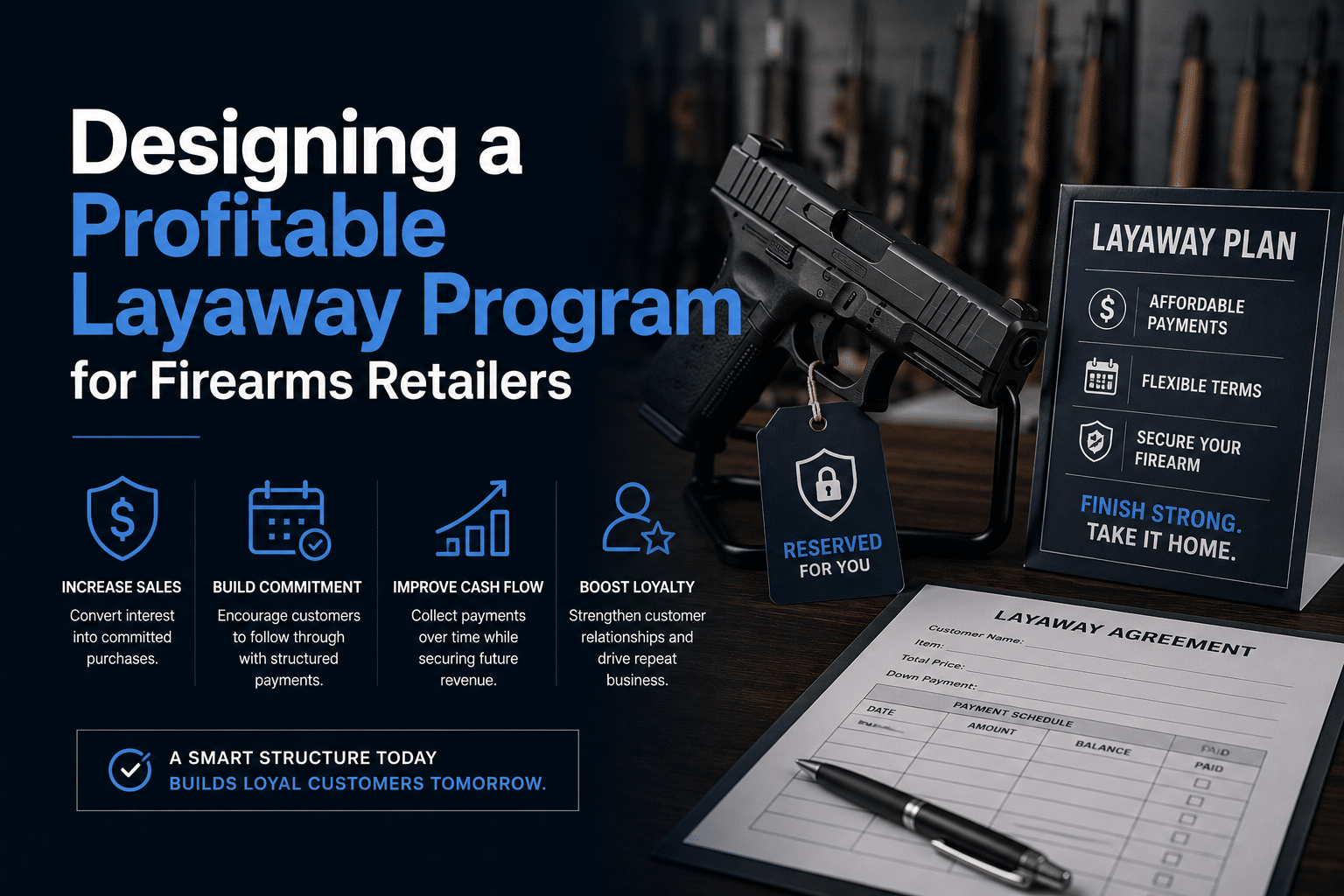
For many firearm retailers, layaway programs remain one of the most effective tools for increasing sales while making higher-ticket purchases more accessible to customers. Whether a buyer is purchasing their first handgun, upgrading to a premium rifle, investing in optics, or building a complete hunting package, layaway can help bridge the gap between interest and affordability.
However, not all layaway programs are created equal. A poorly structured program can create inventory challenges, administrative burdens, and increased risk. A well-designed program can improve cash flow, increase conversion rates, reduce abandoned sales, and strengthen customer loyalty.
For firearms retailers, the key is creating a layaway system that benefits both the customer and the business.
Why Layaway Still Matters
Modern consumers have more financing options than ever before. Credit cards, Buy Now Pay Later services, and installment loans are widely available.
Yet layaway continues to serve an important purpose.
Many firearm buyers prefer avoiding debt or interest-bearing financing. Others may not qualify for traditional financing programs. Some simply appreciate the discipline of making scheduled payments before taking possession of a firearm.
Layaway provides a straightforward alternative.
Rather than taking possession immediately and paying over time, the customer reserves an item and completes payment before pickup.
This approach often appeals to customers who value budgeting, financial flexibility, and predictable payments.
For retailers, it can create additional sales opportunities that might otherwise be lost.
The Benefits of a Well-Structured Layaway Program
A successful layaway program can generate advantages beyond simply increasing sales volume.
Higher Average Ticket Sizes
Customers frequently purchase more expensive products when payment can be spread over time.
A buyer who initially planned to purchase an entry-level firearm may feel comfortable selecting a higher-end model when monthly payments are available.
This can increase revenue without increasing sales volume.
Improved Customer Retention
Layaway creates ongoing engagement between the customer and the retailer.
Over several months, customers often return to make payments, browse inventory, purchase accessories, or seek additional product recommendations.
These repeated interactions strengthen customer relationships.
Reduced Financing Complexity
Unlike traditional financing programs, layaway typically does not require credit approvals, loan agreements, or third-party lenders.
This simplicity makes implementation easier for many businesses.
More Predictable Revenue
Regular payments create a steady flow of incoming funds that can help smooth revenue fluctuations throughout the year.
Choosing the Right Deposit Amount
One of the most important decisions involves establishing an appropriate initial deposit requirement.
A deposit serves several purposes:
- Demonstrates customer commitment
- Reduces cancellation risk
- Helps cover inventory allocation costs
- Provides immediate cash flow
If the deposit is too small, customers may abandon purchases more frequently.
If the deposit is too large, participation rates may decline.
Many retailers require a percentage of the purchase price as an initial commitment. The exact amount should reflect factors such as inventory availability, product demand, and overall business objectives.
The goal is finding a balance that encourages participation while protecting the business.
Establishing Payment Schedules
Consistency is critical.
Customers should understand exactly how the program works before enrolling.
Common questions include:
- How long is the layaway period?
- How often are payments required?
- Is there a minimum payment amount?
- What happens if a payment is missed?
- Can the balance be paid off early?
Clear answers help eliminate confusion and reduce disputes.
Retailers should document these terms in writing and provide customers with copies of the agreement.
Transparency creates confidence and helps ensure expectations remain aligned.
Managing Inventory During Layaway
Inventory allocation is one of the biggest operational challenges associated with layaway programs.
When a firearm enters layaway status, it is typically removed from available inventory.
That creates opportunity costs.
The item can no longer be sold to another customer while payments are being collected.
Because of this, retailers should carefully evaluate:
Product Demand
High-demand products may require different policies than slower-moving inventory.
Inventory Levels
Retailers with deep inventory may have more flexibility than businesses carrying limited quantities.
Layaway Duration
Longer programs create greater inventory exposure.
The longer an item remains reserved, the greater the opportunity cost.
Balancing customer convenience with inventory efficiency is essential.
Creating Effective Cancellation Policies
Every layaway program should address cancellations.
Even committed customers occasionally encounter life changes that affect their purchasing decisions.
Without a clear cancellation policy, disputes can arise quickly.
Policies should explain:
- Whether deposits are refundable
- How partial payments are handled
- Administrative fees, if any
- Time limits for cancellation requests
- Procedures for returning items to inventory
Consistency matters.
Applying policies fairly and uniformly helps protect both the business and customer relationships.
Avoiding Chargebacks and Payment Disputes
Although layaway transactions generally experience lower dispute rates than many ecommerce purchases, problems can still occur.
Common causes include:
- Misunderstood terms
- Missed payments
- Cancellation disagreements
- Confusion regarding refunds
Several practices can help reduce risk.
Document Everything
Maintain records of:
- Signed agreements
- Payment history
- Customer communications
- Cancellation requests
- Refund transactions
Provide Receipts
Customers should receive confirmation whenever a payment is made.
Communicate Regularly
Automated reminders can help customers stay on track and reduce missed payments.
Use Clear Language
Policies should be easy to understand and free of unnecessary complexity.
The easier the process is to understand, the less likely disputes become.
Technology Can Simplify Administration
Modern payment systems can significantly reduce the administrative workload associated with layaway management.
Useful features may include:
- Automated payment reminders
- Secure payment storage
- Online payment portals
- Digital receipts
- Customer account histories
- Reporting dashboards
These tools improve operational efficiency while creating a better customer experience.
For retailers managing dozens or hundreds of active layaway accounts, automation can save substantial time.
Training Staff for Success
Employees play a major role in the success of any layaway program.
Staff members should understand:
- Program requirements
- Payment procedures
- Cancellation policies
- Customer communication expectations
Consistent explanations reduce misunderstandings and help create a professional customer experience.
When customers receive different answers from different employees, confusion often follows.
Training helps eliminate that problem.
Integrating Accessories and Add-On Sales
Layaway programs often create opportunities for additional sales.
Customers making payments over time may decide to add:
- Optics
- Cases
- Ammunition
- Slings
- Magazines
- Cleaning supplies
- Training courses
Retailers can use these interactions to provide value while increasing overall transaction size.
The objective is helping customers build complete solutions rather than focusing solely on the initial firearm purchase.
Measuring Program Performance
Like any business initiative, layaway programs should be evaluated regularly.
Useful metrics include:
- Enrollment rates
- Completion rates
- Cancellation rates
- Average transaction values
- Payment compliance rates
- Revenue generated
Tracking these metrics helps identify opportunities for improvement.
Small adjustments can often produce meaningful results over time.
Building a Layaway Program That Benefits Everyone
Layaway remains one of the most practical sales tools available to firearm retailers. When designed thoughtfully, it creates value for both customers and businesses.
Customers gain flexibility and affordability. Retailers gain increased sales opportunities, stronger customer relationships, and improved revenue consistency.
The key is establishing clear policies, maintaining strong communication, documenting expectations, and leveraging technology to simplify administration.
A successful layaway program is not simply a payment option. It is a structured process that supports customer satisfaction while protecting the business from unnecessary risk.
Retailers who invest in creating an organized and transparent layaway experience often find it becomes a valuable contributor to long-term growth and customer loyalty.